

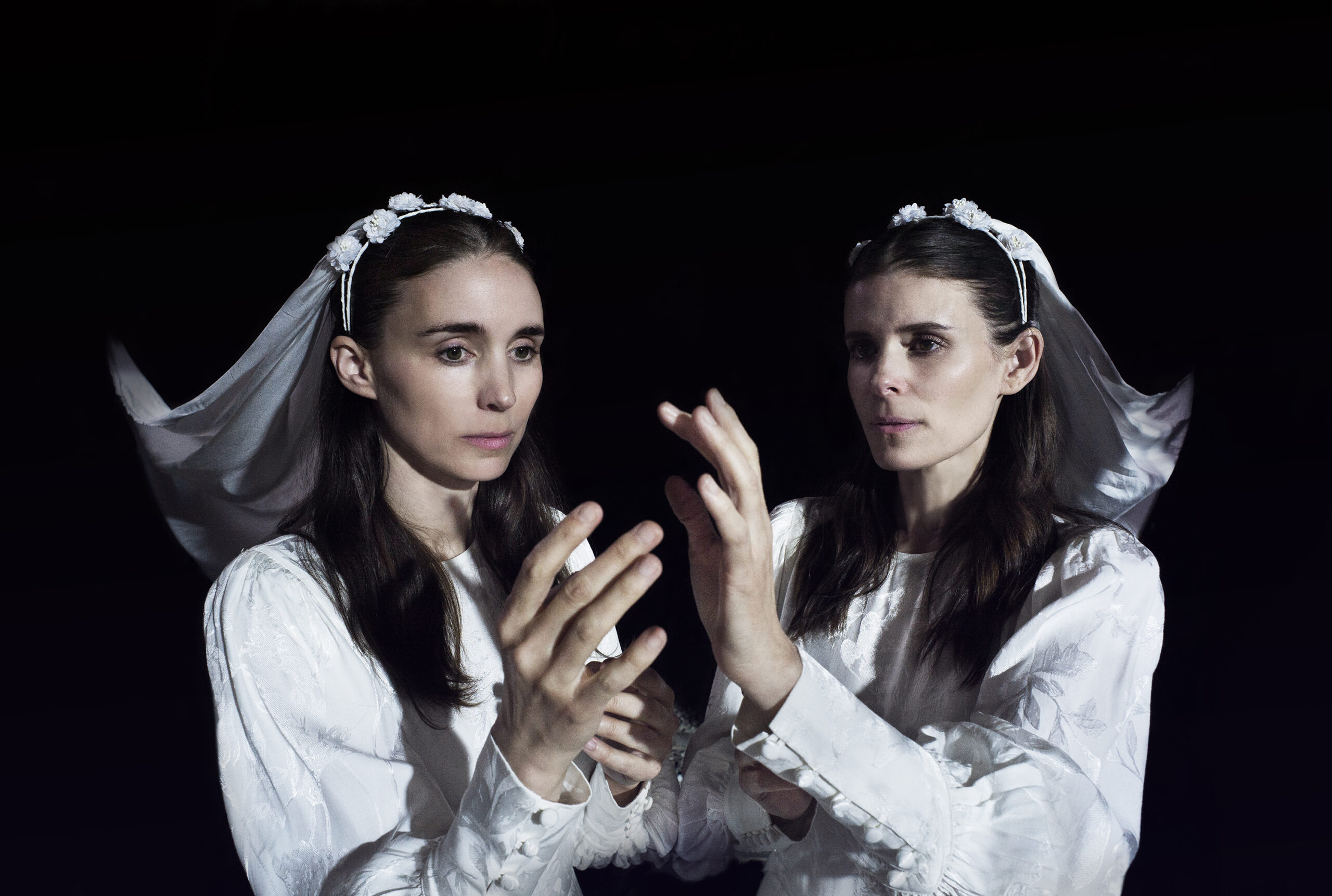
Image Credits: Courtesy of Film at Lincoln Center/NYFF64
When the family of David Lynch publicly announced his passing through the artist’s Facebook account in 2025, they ended their message with the same sign-off Lynch would use when he graced the world with updates on the ever-constant weather in Los Angeles: “It’s a beautiful day with golden sunshine and blue skies all the way.” Whether this was the world Lynch saw or the world he wanted to see, we will never know. The late filmmaker was a close friend of Werner Herzog for decades, and after diving headfirst into the German icon’s newest movie, “Bucking Fastard,” it’s easy to see why he dedicated it to Lynch. Herzog’s bizarre fairytale screened as part of the 64th New York Film Festival, and in spite of its expected strangeness, it seems to usher in a new chapter for the typically nihilistic director; one defined by the power of radical love and empathy in the face of an uncaring world.
“Bucking Fastard” is the story of sisters Jean and Joan Holbrooke (Kate and Rooney Mara respectively), a pair of twins who think, speak and feel as one. After being pushed into the public eye following their somewhat extreme response to a philanderer breaking their hearts, the girls travel to rural Ireland in search of a place where love can grow free and open without the evils of the world intruding on it. When they think they’ve found a path to this perfect world via a series of mysterious caverns located deep within a nearby mountain, the girls set out to literally dig their way to paradise, a labor of love that in typical Herzogian fashion proves easier said than done.
There’s an unexpected, childlike kindness throughout Herzog’s film that feels utterly new. The prolific filmmaker has never been a stranger to wonder, nor to earnestness, but in all of his films of ambitious freaks trying to achieve the unachievable there has never been such a tender love towards their plight nor their pursuits. Jeanie and Joanie are odd, sure, but unlike his past works such as “Fitzcarraldo” (1982) or “Aguirre, Wrath of God” (1972) the trials and tribulations of the girls do not come as teaching moments on hubris or the pitfalls of passion. The Mara Sisters, though ominous in their complete synchronicity, bring an alien uniqueness to the girls. From being completely offline, to their gentle kinship with animals, the Mara’s uncanny performances heighten the already ethereal qualities of the Holbrooke sisters in a way that makes them feel like faeries prancing around the Irish countryside in search of a better world.
Ireland is as much of a celestial character in “Bucking Fastard” as the sisters who call it home. Herzog’s longtime cinematographer Peter Zeitlinger photographs the streets of Dublin and the lushness of Kildare with a storybook gaze that narrows into the otherworldly as the girls venture underground. In a pivotal scene, the caverns and stalactites of the mountainside are captured with such a wonder that it feels as if we’ve been gifted the worldview of the Holbrookes themselves through the frame, wrapped up in their awe at the natural beauty of the world. At the same time, the environmental storytelling opens up a door for the sadder undercurrents of the Holbrookes’ story. The skies are rarely not grey and gloomy, and the splendor of cobblestoned city streets or untamed forests can only be felt for so long before perverts or hunters come to besmirch the peace with unwanted advances towards the Holbrookes or poisonous campaigns against their furry friends. As filled with love and sensitivity as Herzog’s film is, the world in which it inhabits is one where those qualities are perpetually under attack.
Where the influence of the late, great Lynch comes in is through this bittersweet battle of innocence trying to find peace in a world that loves to destroy the little things. Lynch loved to tell stories of women in trouble, and the Holbrookes would feel right at home alongside his oeuvre of log ladies and radiator girls. Their struggle at the hands of manipulative, creepy and often lying men captures a certain oppression that Lynch loved to traffic in. Herzog and Lynch also find themselves bonded by their cinematic fetish for Sisyphus’ struggle, and the Camusian philosophy that pervades a lot of their works shines through “Bucking Fastard.” At one moment, Herzog even pokes fun at his notorious choice to drag a full steamboat up a mountainside during the making of “Fitzcarraldo” with a line that, while tongue-in-cheek in its reference, rings as true as it did when it appeared in Les Blank’s 1982 documentary “Burden of Dreams” in different phrasing: “Everybody should dig a tunnel through a mountain.”
“Bucking Fastard” is many things. It’s a love letter to Herzog’s lost friend and his unkillable heart, an extended hand to weirdos everywhere, a folkloric reimagining of the tragic real-life bond shared by two twins. But above all else, it’s a story that demands its audience believe in true love. Herzog doesn’t sugarcoat the life of a lover in a cruel world; he can’t guarantee a happy ending. However, to feel love at all, let alone enough to make you set fires or hollow out mountainsides, is proof of its power. Werner Herzog, like David Lynch, has never told particularly uplifting tales, but knowing it’s about the journey and not the destination has never been their shortcoming. At the end of his 1942 essay “The Myth of Sisyphus,” Albert Camus said that “the struggle itself towards the heights is enough to fill a man’s heart.” As the Holbrooke twins embrace the impossible with the same passion Herzog has donned time and time again, it’s clear that Camus understood what love can bring a person: one must imagine Sisyphus happy.
Elijah Fischer is a senior majoring in English with minors in Journalism and Film Criticism. Af997636@wcupa.edu