

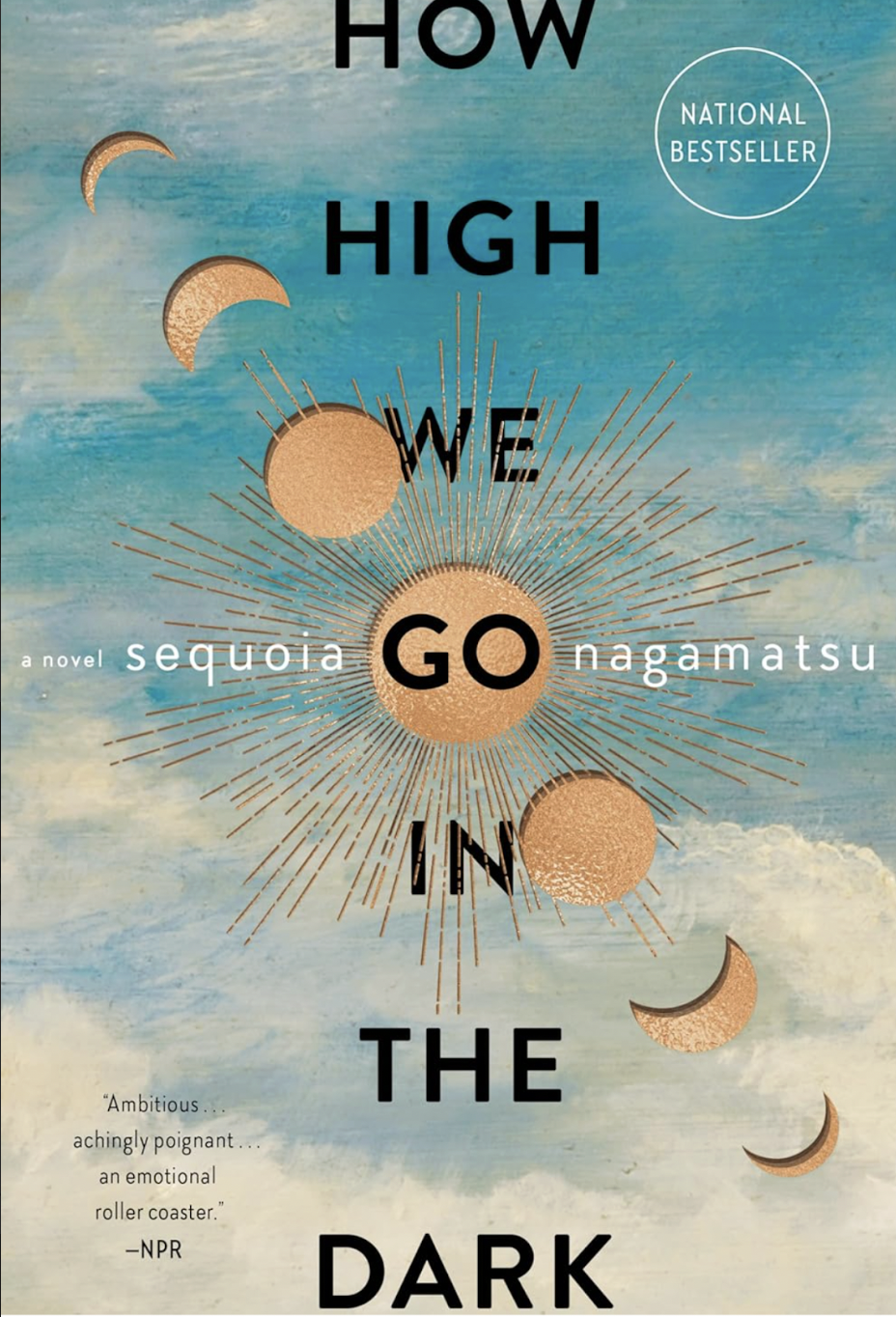
Image Credits: Copyright owned by Sequoia Nagamatsu. Hardcover edition published by William Morrow, an imprint of HarperCollins Publishers
I knew this was going to be good after I bawled my eyes out in Chapter Two.
Plague fiction is great, because where else would “The Walking Dead” come from? I’ve definitely seen it spike in popularity since the pandemic, and from what I’ve seen, it’s always in some post-apocalyptic world after the disease has already ravished everybody. But what if we had a plague that could end the world and the world kept going? What if capitalism shifted to create an economy built on sickness and death? This is the horrific sci-fi world of the interconnected short story collection, “How High We Go in the Dark.”
After Dr. Clara Miyashiro’s death results in a 30,000-year-old body being unearthed in Siberia’s melting ice caps, her father travels to see his adopted daughter’s last discovery. After reanimating the virus responsible for the corpse’s demise, it spread throughout the base and eventually beyond Siberia, infecting the water and hopping onto mainland North America. Each chapter centers around a new character—though they are all connected to each other in some way— we enter a world of euthanasia parks, death hotels, and holographic graves. All the while the sea levels are rising, coastal cities are going underwater, and wildfires are plaguing California. How can people survive when their connections to each other are becoming so fraught?
The writing style is so personal, we learn so much about each character and their dynamics with others despite seeing relatively little. The dichotomy between the active and passive roles are ever present through the story, with our main cast being in the passive because of their circumstances contrasted with the people in their lives playing a much more active role. That’s what makes it so powerful when we see the characters we’ve become so attached to act. Every plot point has a personal weight, no matter how absurd they are, and so the reader takes it incredibly seriously. It doesn’t make it a fun read, but it sure makes it a thoughtful and compelling one.
The author has a unique perspective as a Japanese-American that he uses to enhance the characters and their stories. All of the characters are either Japanese-American, based on the West Coast, or are Japanese themselves. All are impacted by being Asian and part of the diaspora, and very interesting parallels are made using this concept. We have parents leaving their children for better lives, spouses leaving each other for a chance. The characters are tied together by the thread of keeping their culture alive, whether it’s their home culture or the expectations of their family, the sacrifices people make or don’t make and why they made that choice. And the sinking cities in Japan, heightened by the plague, provide discussion on immigration and enhance the nuances of the diaspora.
But the real thread that holds everyone together is their sense of inadequacy. The plague has worsened everyone’s insecurities and provides a sense of urgency to get themselves together and reach out into the void, desperately waiting for a person or an answer that can give them the redemption they crave. They want to redeem themselves and redeem the world, redeem beyond the world. Redemption comes from people holding another, the true heart of the story. At the end of the day, everyone just wants to save their community. The plague is only the background. A morbidly beautiful background.
It would’ve been very easy for Nagamatsu to capitalize on Covid, but he doesn’t, with the Arctic Plague having almost no similarities to the disease and our pandemic. He puts the plague in context with climate change altering our world, giving the reader a sense of urgency and responsibility to save it. If a plague could come from melting ice caps, what else could come next? I also appreciate how Nagmatsu refuses to stay within the confines of realism by adding sci-fi and extraterrestrial elements that build up from the very first chapter, and leans into them as the book goes on. The motif of space is beautiful, with everyone’s gaze tainted by this connection and longing for the stars. While some readers have critiqued these elements, I argue they don’t take away from the emotional weight at all. They build on the themes and give an outside perspective to everything going on in our world.
I have reread sections of this book ever since I finished it, and I have cried every time. Whether it’s intentional emotional blackmail or not, no book has hit me as much as this one.
Emily Rutz is a second-year English major with a French minor. ER1034711@wcupa.edu