

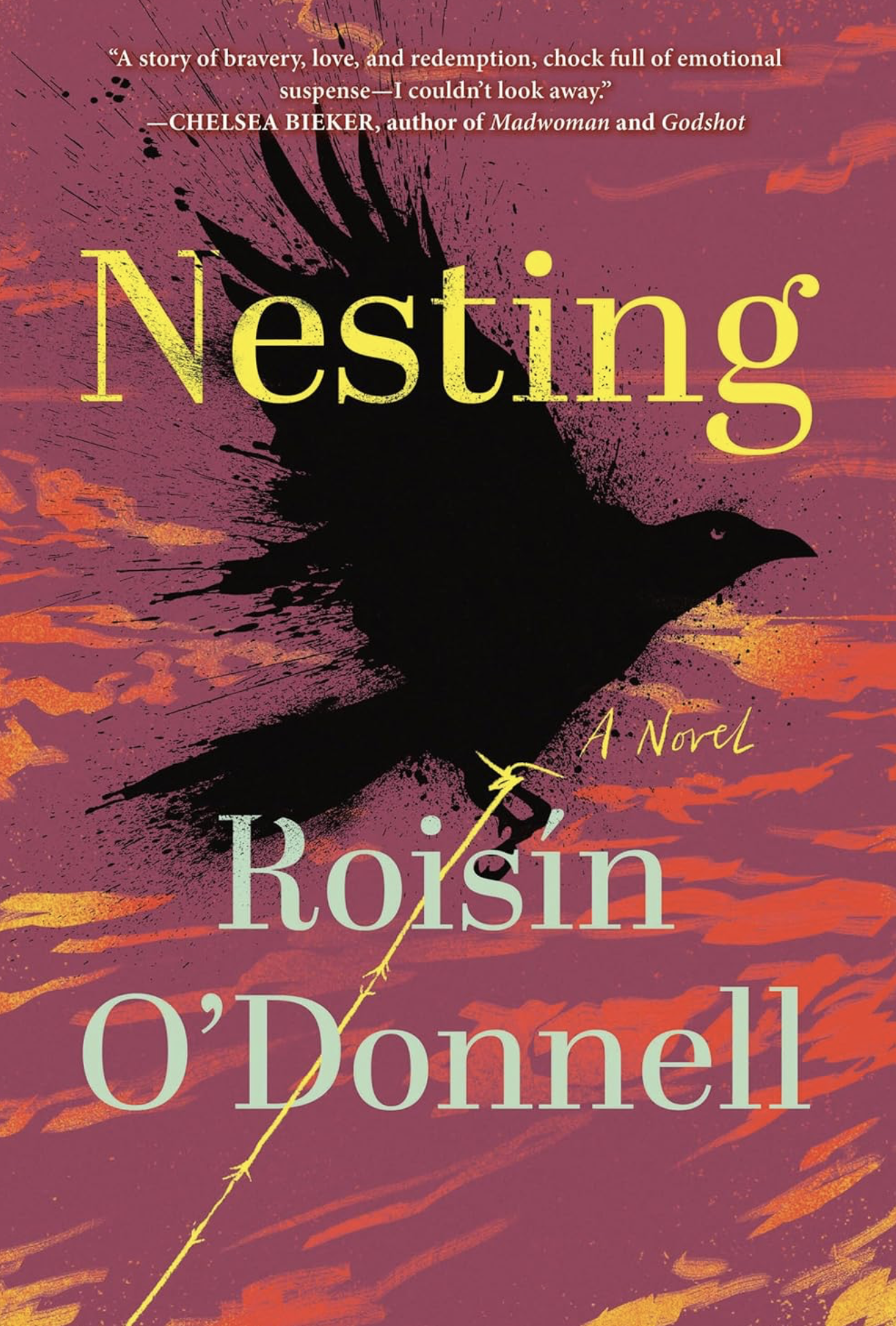
Image Credits: Design by Steve Godwin, Copyright owned By: Rosín O’Donnell, Published by Simon & Schuster UK Ltd
Warning: this article discusses domestic abuse and violence
It takes an average of seven attempts to leave an abusive relationship, and reading this book helped me understand why.
“Nesting” (2025) takes place in 2018 Dublin and features 36-year-old mother and former schoolteacher, Ciara Fay. After five years of mistreatment and abuse from her husband, Ryan, she grabs a bunch of clothes from the laundry while he’s in the shower, puts her daughters in the car and drives away. Now having to raise her children from a hotel room, she navigates her husband’s desperate attempts for her to come back with her need to protect herself and her children.
Books like these that delve into the intricacies of abuse are important because they are going to help people spot abusers in the future. Ryan never hits Ciara, and that’s a big reason why she never initially left. But he is neglectful to his children despite wanting full custody. He controls Ciara’s money, tracks her phone and is able to read all her texts, emotionally abuses her and discourages her from following her dreams. These thousands of cuts are what causes Ciara’s whole world to revolve around Ryan until she barely recognizes herself anymore.
Meanwhile, she not only has to face Ryan, but the systems around her that make it near impossible to thrive. The system is flawed and there are not enough resources to protect people like Ciara. This book taught me that standing up against domestic abuse isn’t enough, because the struggles of abuse victims often intertwine with immigrants, homeless people and those in poverty. People assume there are support systems on the other side (where the grass is presumably greener) and shelters are enough, but what do you do when you’re away from your family and the shelters are filled? What do you do when you’re a victim of financial abuse and have no money left? “Nesting” acknowledges and addresses all these realities and makes sure no groups of people are dehumanized or left behind. It’s also a bit of a crash course of Irish politics and what problems the country has to face in its own struggle for self determination.
Ciara Fay as a character is someone I want to wrap into a deep hug. For a literary debut, Roisin O’Donnell fleshes her out so well, especially in the sense that she’s lived a full life beyond the pages. She’s taught all around the world, she graduated from Trinity College (a prestigious university), she’s had previous relationships and a big group of friends at college but the reader never gets to see any of it. She feels like somebody I could run into at a coffee shop in real life, or a distant cousin we meet at a family reunion. The information about Ciara we learn throughout the book makes the circumstances she’s in more tragic, because we know she wasn’t always this way. She’s adventurous, creative and ambitious, and her abuser tried and failed to strip these traits away from her. Her character is never relegated to just being abused, and that is important because that’s how abusers want their victims to be.
The whole theme of her character is how to move on, how to move on from being just a wife or just a mom, how to move on from the constraints of poverty, religion and social stigma. Which is hard because she loves her children so much, and so to see them as a bargaining chip used by Ryan to get to her is especially heartbreaking, especially as we see all three children grow and their vocabulary expand. She was convinced for so long that everything she did had to be for her girls and Ryan, ultimately to learn what is best for herself will benefit them in the end.
Despite the heavy subject matter, this is one of the more hopeful books I’ve ever read. It’s not just about abuse, it’s about motherhood and the power of love and community. It’s about the power of independence and interdependence and going your own way, breaking from the chains of the patriarchy. The muscles around my mouth hurt so much at the end from the amount I’ve smiled.
Nothing I could ever write will do this book justice. No combination of letters on a keyboard could capture how enraptured I was reading it, how deep the moments of triumph were and how impossible it was to put the book down. Reading this felt like watching someone run a race with all possible odds stacked against them, and this makes her victories all the more impactful. Get your tissues out when you read this one and maybe a nice snack, because once you pick it up, you will not be able to put it down.
Emily Rutz is a second-year English major with a French minor. ER1034711@wcupa.edu