

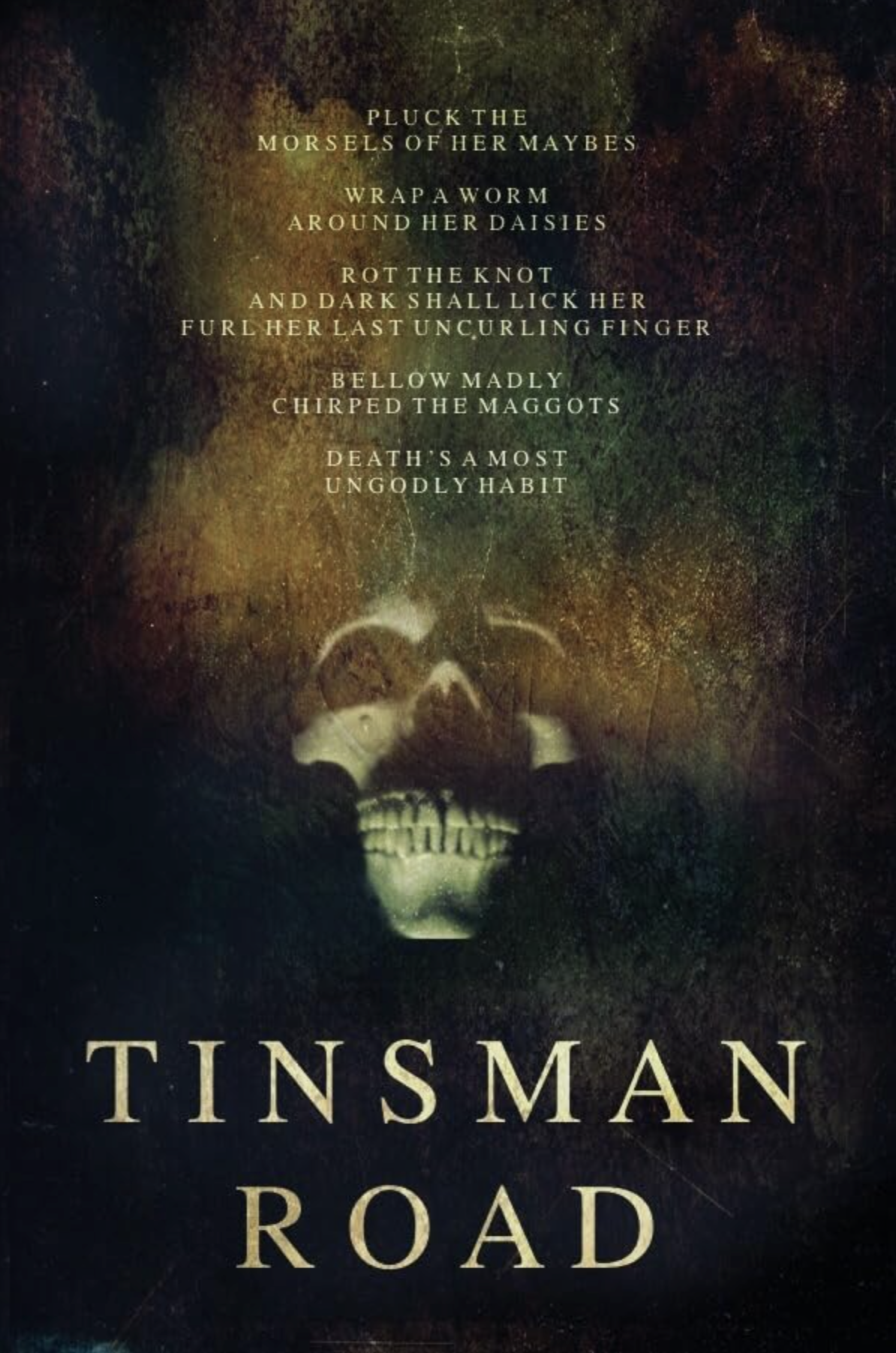
Image Credits: Robbie Banfitch via IMDB
Independent horror has always been the beating heart of the film industry. It draws out some of cinema’s most creative voices, provides an egalitarian opening in a business that is nearly impossible to break into and consistently overperforms despite an utter lack of resources. The Philadelphia Unnamed Film Festival (PUFF) knows this better than anyone. On Oct. 3, an Alumni Night featuring filmmakers who have previously showcased their work at the festival debuted the newest features from Robbie Joe Banfitch (breakout writer-director of “The Outwaters”) and Alex Phillips (“All Jacked Up And Full Of Worms”). Cinema is in a tumultuous state right now, fighting to stay alive as big franchises, AI and other stagnant corporate interests try to bludgeon it to death. Festivals like PUFF, and features like “Tinsman Road” and “Anything that Moves,” remind us that the future of cinema rests solely on the shoulders of freaks unafraid to scream if it means having their voices heard in a world that doesn’t want to hear them. With the power of midnight cinema more palpable than ever, it feels safe to say we’re in good hands.
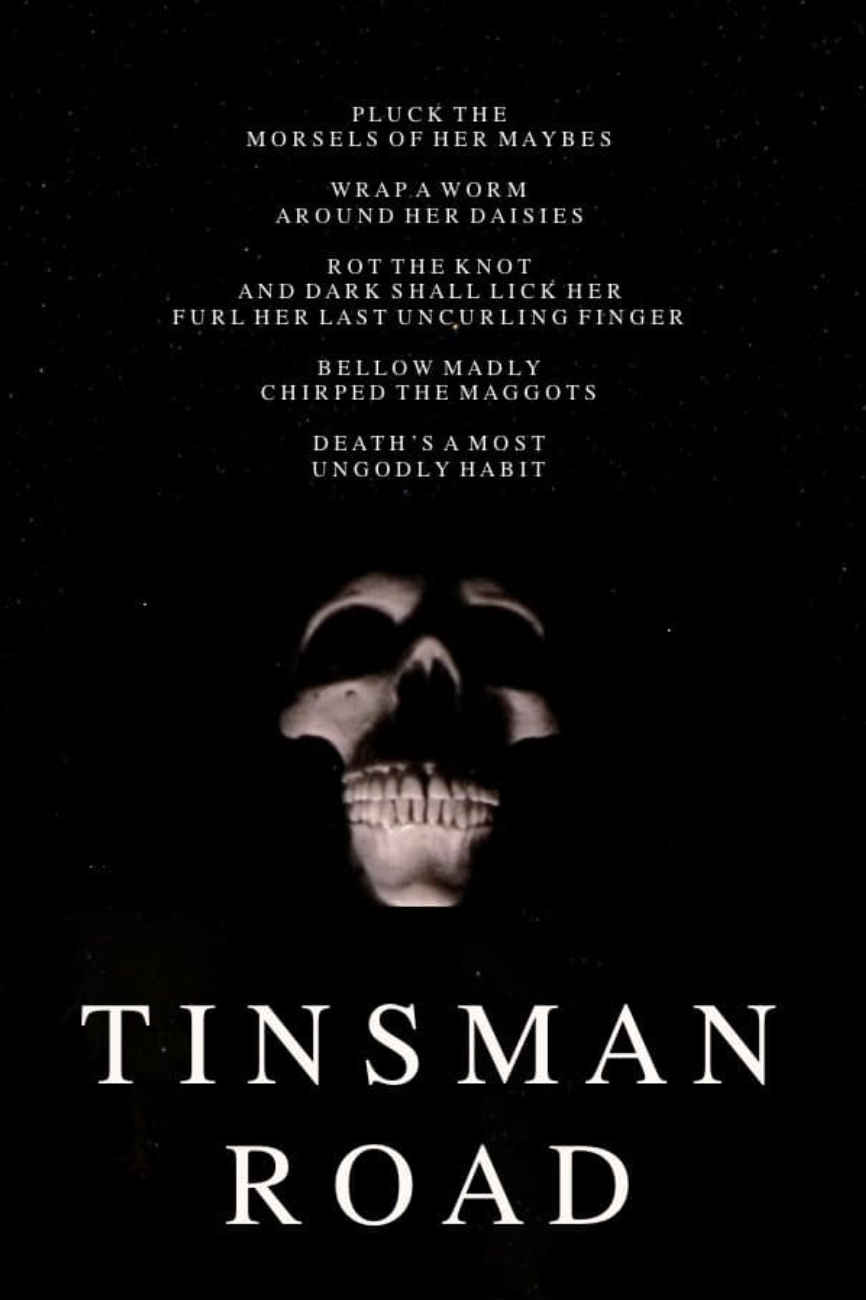
“Tinsman Road” official poster via Letterboxd.
“Tinsman Road”
In the coming decades, when the films of the 2020s are looked back on and studied, Banfitch’s name will be counted along the likes of “I Saw the TV Glow” director Jane Schoenbrun as seizing this cinematic moment to invent a new language through his films. “The Outwaters” (2022) shocked the world not only through its ability to terrorize, but through showing what Banfitch was capable of achieving on the lowest possible budget. A high-concept found footage nightmare that was part “Dante’s Inferno,” part “Blair Witch,” and yet unlike anything you’ve ever seen before. “Tinsman Road” (2025) continues Banfitch’s ability to horrify and impress, but also proves his range as a storyteller through its lean into the intimacy and homegrown horror that before was merely hinted at. Blurring the lines of fiction and reality, Banfitch uncomfortably transfers his own traumas to the audience, and through forcing us to see ourselves in him rather than keeping us at arms length he makes his terror and sorrow all the more visceral.
“Tinsman Road” centers on Robbie Lyle (played by Banfitch himself), a Californian returning to his troubled childhood home in rural New Jersey after years away, in order to make a documentary on his sister Noelle, who wandered off the titular road into the nearby woods one day and was never seen again. Bombarded with supernatural clues, Robbie interviews his increasingly delusional mother as well as lost-soul townies on the truth behind ghosts and angels, capturing the decay settling over his hometown as he gets closer and closer to finding out what really happened to his missing sister.
Banfitch is a genius of digital cinematography, saying so much through simplicity and ambiance. He exhibits a restraint so rare to see in film these days, knowing exactly how much to show and when to show it for maximum chills. More importantly, he is utterly vulnerable in his storytelling, unafraid to merge his real life with this fictional story in a way that makes the grief and loss rawer than expected. Banfitch’s real mother plays his fictional one, a tactic he used previously in “The Outwaters” which strikes an entirely new emotional chord here, and it’s impressive how comfortable “Tinsman Road” is with making its audience uncomfortable through flagrant disregard for the line separating what we know to be real from what we know to be fake. It hammers home what Banfitch aims to do as an artist: make films that are felt rather than simply watched. His textured nightmares are designed to make you feel something. What you feel is left up to you, but “Tinsman Road” will claw the emotion out of you kicking and screaming, whether it makes you comfortable or not.
“Anything that Moves”
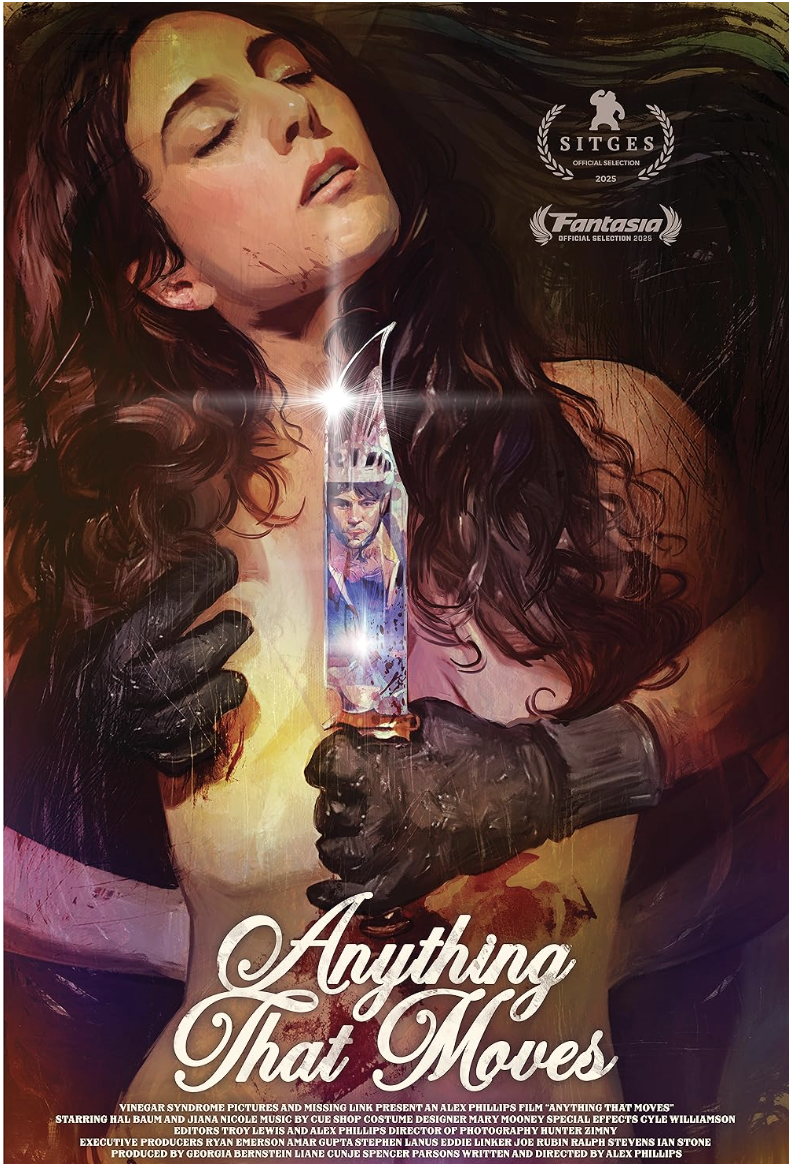
“Anything that Moves” Poster via IMDB.
Often filmmakers setting out to make something that channels another era of cinema, particularly the 1970s, never take the time to make sure that channeling goes beyond a few neon lights or a superficial film grain. Phillips is the exception to that rule, and he makes sure we know it. “Anything that Moves” follows Liam, a bike-courier/prostitute living in Chicago whose clients are being violently murdered. As the bodies pile up, Liam finds himself the prime suspect, leading to a uniquely Chicagoan odyssey full of golden showers, ketamine and blood.
Despite its sordid subject matter, “Anything that Moves” has an attitude towards sex and nudity that is uniquely warm and personal. Phillips establishes a proper 70s look through his gorgeous 16mm cinematography, but also through a revolutionary sentiment on sex work that doesn’t view transaction as empty or manipulative. Additionally, the film plays fast and loose with sexuality and gender but never wastes time explaining itself, which is a refreshing and increasingly necessary attitude towards how queerness should be depicted in art. In his debut feature performance, Hal Baum reaches new heights of authenticity as an actor that many spend their entire careers merely dreaming about. Much of the film’s sunniness shines through him, and his natural charisma is an anchor amidst the sleaze. “Anything that Moves” has been a standout of the festival circuit, and when face-to-face with its naked remarkability, it’s easy to see why.
Philadelphia Unnamed Film Festival, run out of a small theater in a tucked away corner of South Philly from Oct. 1-5, is a monument to the midnight movie, to the local artist and to the microbudget labor of love. What you see there you will probably never see again, but if you do get the chance it will likely only be in the shadows of a late-night screening amongst the most unsavory of crowds. Sitting there, you’ll finally understand what cinema is all about: taking those who have been pushed to the outskirts of society and allowing them to yell into the night. In a pitch-black room, before the glowing light of the movie screen, we are all equal.
Elijah Fischer is a fourth-year English & MDC Major. To contact email at Af997636@wcupa.edu.