

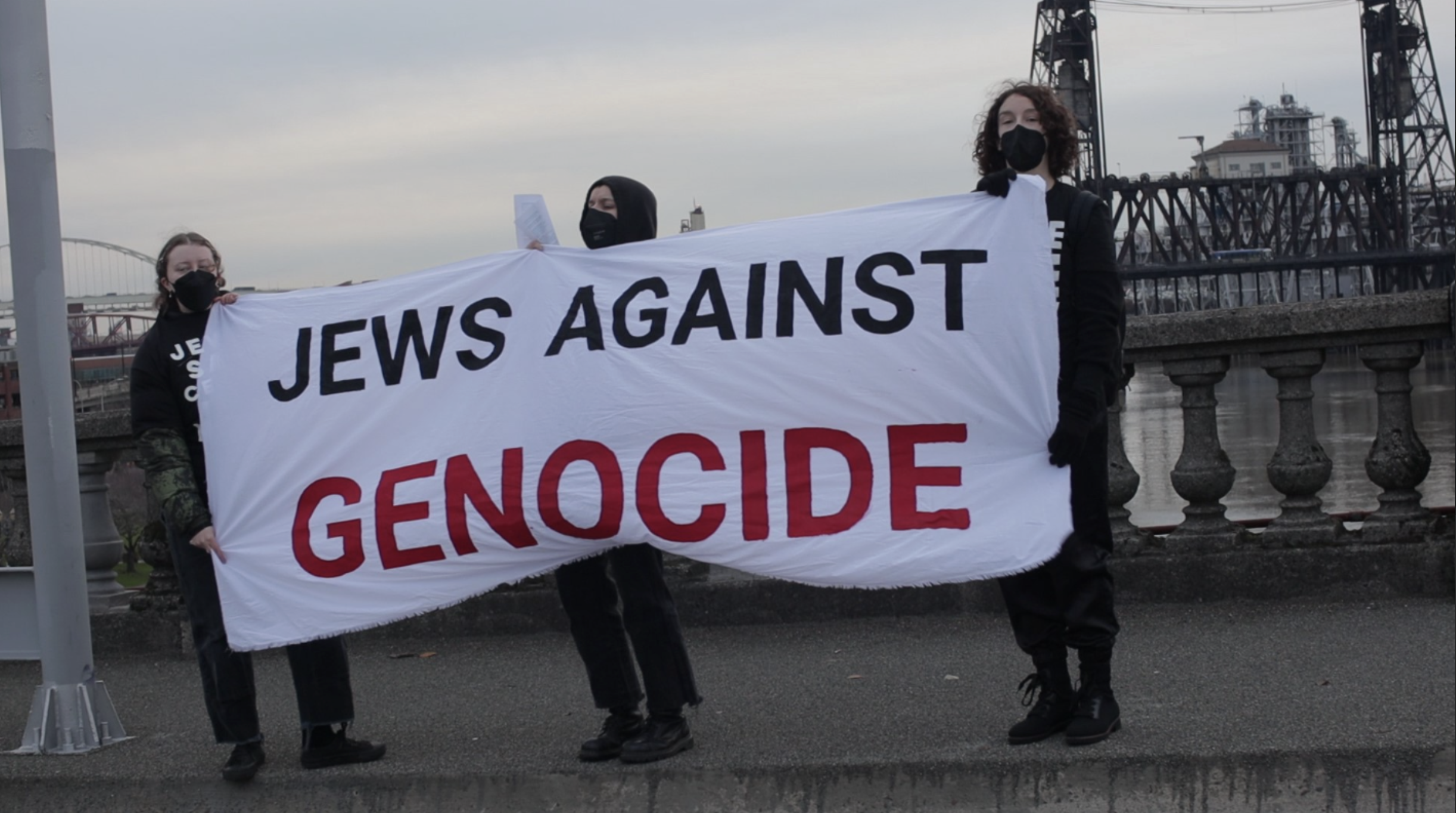
Image Credits: The Palestine Exception via https://palestineexceptionfilm.com
Hosted by the WCUPA Faculty and Staff for the Justice in Palestine, “The Palestine Exception,” directed by Jan Haaken and Jennifer Ruth, was screened on Sept. 30 for all West Chester students to watch. Since the documentary’s release on Nov. 15, 2024, it has been screened all over the world. Over the last few years, many may have mentally blocked out news coming out of Gaza. They may have ignored or forgotten the student protests standing up for divestment in hopes of sparing tens of thousands of Palestinians’ lives, but “The Palestine Exception” makes sure you know who they are and who is trying to suppress them.
The film focuses heavily on the numerous protests calling for the end of Palestinian genocide on college campuses, such as Hunter University, Portland State University, Columbia University and more. Palestinian college students who shared their experiences highlighted the level of impact that Israel’s actions have had on Palestinians abroad as well as in Gaza and the West Bank. Their testimony shows that this is not a war happening thousands of miles away; this is a genocide that has an international impact that effects Palestinians all across the globe.
Among those who took to the streets, formed encampments and made their voices loud and clear were student organizations such as Jewish Voices for Peace and Students for Justice in Palestine. However, despite the call for ceasefire and liberation coming from both Jewish and Palestinian students, many colleges and universities went to great lengths to silence the voices of their students and faculty participating in these organizations. This gratuitous censorship effort did not stop with the students, however.
It’s difficult for one not to draw parallels between anti-war protests to support Gaza and the previous largest anti-war movement in American history, which occurred during the Vietnam War. One key aspect of this comparison that the film draws on is how the backlash to both of these movements has hit those working in higher education. In both instances, educators and administrators’ integrity has been called into question simply because they held anti-war or other left-leaning political views. In the seventies, many professors were fired just for pleading the Fifth Amendment when testifying. Most of the pressure at the time was coming from higher education or government systems. Now, after many years, this same pressure is back along with pressure from many other voices with communication being easier than it once was. At the City University of New York, for example, fifty professors were fired for, as the film puts it, being leftists. Considering what Palestinian faculty are going through, however, makes this bureaucratic nightmare seem like a cakewalk.
In Gaza, all twelve universities have been entirely destroyed and over 700 students and faculty had been killed as of the making of the film. Jehad Alayasa, an assistant professor at Birzeit University in the West Bank, and his family are currently living without a home and are staying with friends on either side of the West Bank-Jordan border. He spoke about his experiences of passing through extensive check points just to get to work, as well as the devastation of both his homeland and of the higher education system all together.
Since the film was completed in 2024, horrific actions have continued to occur in Palestine. Recent events, however, have created a new context for viewing the conflict as on after Sept. 16, 2025, the UN Independent International Commission of Inquiry on the Occupied Palestinian Territory declared that Israel has committed genocide against Palestinians in the Gaza Strip. While it was a bit of a foregone conclusion, it is encouraging to see that increased international pressure is being brought to bear on Israel. However, despite this recent revelation by the United Nations, the United States continued its rigorous support for Israel. In fact, only two days later, the U.S. vetoed a UN resolution that would have caused an immediate ceasefire in the Gaza Strip. While unsurprising given the Trump administration’s lack of logic and reason, it is still deeply upsetting to see the United States be so eager to support and defend the actions of a brutal regime.
After the screening of the film, the audience was able to have a question and answer session with co-director Jennifer Ruth. Several Palestinian students thanked her for making the film, expressing that they felt seen by it and that it would be a good tool to educate those who are less informed. Those students also spoke about how Palestine has never had self determination over itself and thus having people willing to speak up is incredibly important. Despite its attention to detail, Ruth highlighted that there has been a litany of horrific events in Gaza since the film finished production but that the drive to finish it was fueled by a desire to give those who are uninformed a starting point. The conversation also yielded a discourse on internationality; highlighting how the United States funds Ukraine’s defense effort, viewing it as ‘deserving’ of help because of their white/European status but refuses to defund Israel for performing similarly aggressive actions when compared with Russia. Ruth also stressed that the United States, in this “fascist” moment, is co-opting the silencing of activists in order to enforce its authoritarian belief systems and that it was still just as important as ever to speak out.
With the main goal of the film being to educate people and spread awareness about the issues facing Palestine and those who advocate for it, one student asked what Ruth believed was the best way to go about educating people in our own lives. Her hope was to approach these conversations with reason and empathy, detailing some re-framing techniques that would nurture greater empathy for the plight of Palestinians.
Starting with the base idea that it is not antisemetic to criticise the state of Israel for its genocidal actions and apartheid regime, Ruth made it a clear statement of fact rather than a flexible opinion. The notion that any person or state should not be held liable for this type of behavior, is beyond incomprehensible no matter how many times it must be repeated. Despite the explosive moments in the streets or on campuses and the convictions of those in power, either foreign or domestic, it must ultimately come down to one essential premise: if Israel has the right to exist, then surely Palestine does as well.
Samuel J. Beadle is a second-year English major. SB1033446@wcupa.edu
Connor Lydon is a fourth-year Media and Culture major with minors in Digital Marketing, Film Criticism, and Journalism. CL998415@wcupa.edu