

The media of the mid-2020’s has been inextricably stained by two monsters: Ronald Reagan and Jeffery Epstein. One begets the other, the capitalist landscape set up across the globe in the 1980s by orchestration of Ronald Reagan opened the door for people like Epstein to abuse and exploit while drowning any potential consequences in enough money to buy silence and acceptance. This hellscape of late-stage capitalism, a world where there is no such thing as any moral rock-bottom, is what Season Four of HBO’s “Industry” lays out.
Rome has burned, the once great investment firm formerly known as Pierpoint & Co. has been sold and stripped for parts. Its grads, now in their early-30s and settling into the paths that (for better or for worse) they’ve carved for themselves, have moved on to pastures that while not necessarily greener are ripe with opportunity. The goal posts have shifted, and getting ahead is no longer the hard part: reckoning with what it took to get you there is. What results from that shift is a masterclass in tension, revulsive performance and psychological web-spinning that rivals other HBO alumni such as “Succession.” But if that’s the case, why was the previous season of “Industry” shut out of the Emmys, and why does the series overall seem so snubbed of attention from its home platform?
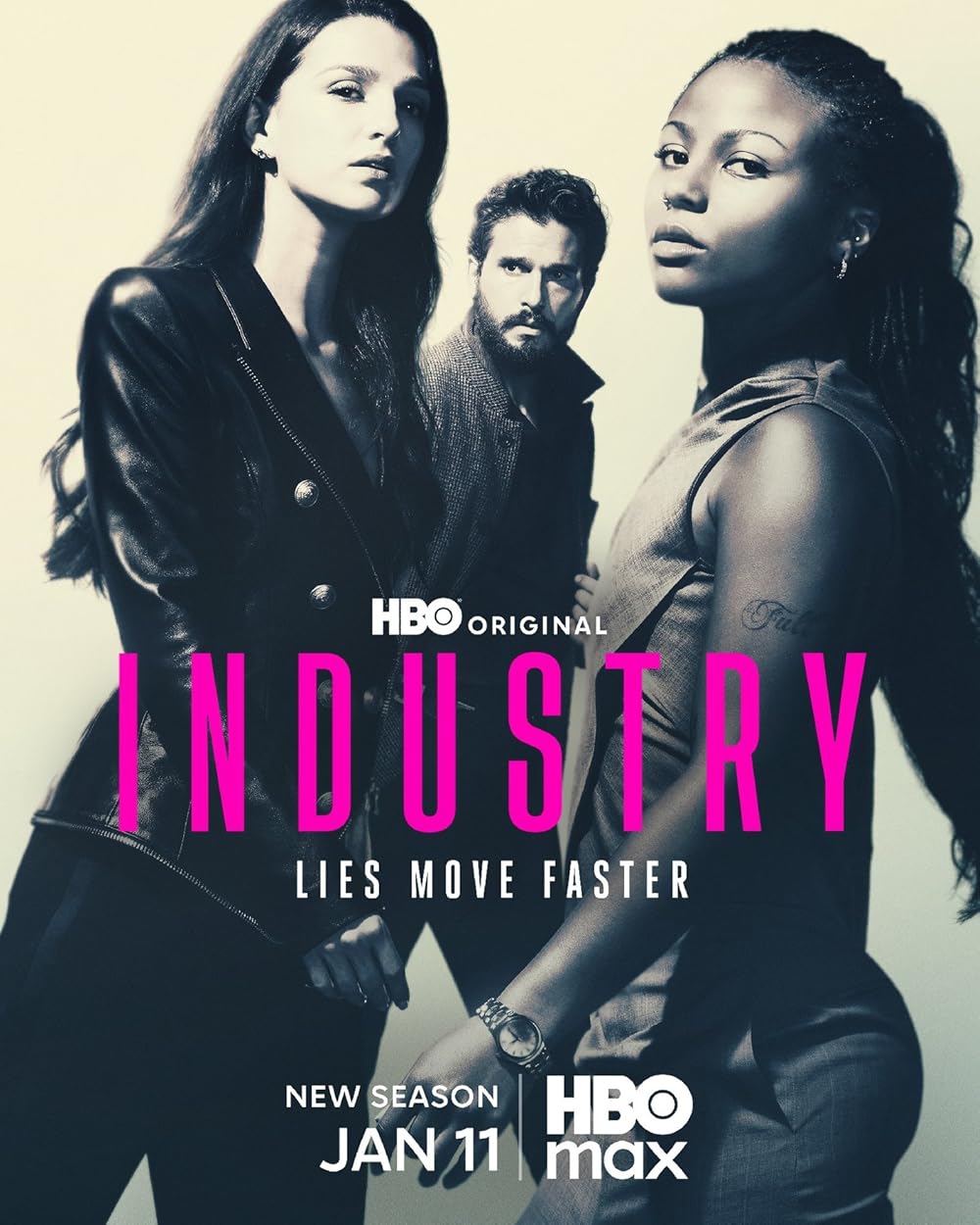
Season Four of “Industry” picks up in the rubble of last season’s bombshell ending. Harper Stern (Myha’la) has settled into a new career as a private hedge fund manager, but is discovering that her chaotic modus operandi comes back to bite her twice as hard without the protection of the banking system behind her. Fellow Pierpoint survivor Yasmin Kara-Hanani (Marisa Abela) is finding similar rude awakenings, having narrowly escaped the legal fallout of her dead father’s sex-pestery and debt by marrying Sir Henry Muck (Kit Harington), only to discover her wings clipped by everything that marriage to a mentally ill drug-addicted aristocrat entails. Harper, Yasmin, and many other familiar faces from the glory days of Pierpoint are reunited by the ascension of Tender, an AI-powered banking app aiming to make the finance world more accessible to everyday people. Things only get more complicated as Harper puts her career on the line to bet against Tender’s success, while Yasmin stakes her husband’s reputation and name on making sure the company succeeds by any means necessary. What results is business as usual for the two women: a machiavellian firestorm where everyone and everything in their path is merely collateral damage in their fight to come out on top.
Though Harper and Yasmin are more centered than ever, the ensemble of characters in their orbit hardly goes to waste. “White Mischief,” the bottle episode focusing on foul-mouthed market maker Rishi and his never-before-seen home life fighting for his slice of the posh pie in the unwelcoming English countryside, was one of the highlights of Season 3. It proved that showrunners Mickey Down and Konrad Kay are more than capable of shrinking down the scope of their epic, depraved ensemble to any character in its roster and showing how every single person in the dehumanizing finance machine has an interior world all their own, filled with its own traumas and hangups and battles for validation. With Pierpoint dead and buried by the beginning of Season Four there is nothing restraining those inner lives anymore: every member of the ensemble gets their time to shine.
Kit Harington and Miriam Petche steal the season as Henry Muck and Sweetpea Golightly, shining through the two best episodes of Season Four: “The Commander and the Grey Lady” and “Eyes Without a Face.” Both episodes echo the stellar interiority of “White Mischief,” but in opposite directions: the former forces us towards empathy for the sickeningly eccentric Muck while the latter drowns us in pity for the exploited and objectified Sweetpea. Each episode speaks to the strengths of the direction Industry is heading towards for its fifth and final season: when the systems that both thrive on and sow the seeds of dysfunction begin to implode, the dysfunction doesn’t die with them, it only leaks and spreads through the people left behind.
Despite an arguably smaller amount of sex and drugs than the previous seasons, the depravity feels to have hit a peak in Season Four, primarily due to the amazing intersection of stellar writing and the performances of Myha’la and Marisa Abela. Harper and Yasmin have always been deeply, deeply damaged people, but the naivety that used to color their insidious behavior has dissipated with age. The writing keeps them vulnerable at times, or at least not fully monstrous, but the certain youthful ignorance that excused away some of their worst impulses in the past has fully left the characters and made their heartlessness crystal clear. Myha’la and Abela are magnificently terrifying as their characters weaponize everything their time at Pierpoint taught them to use, abuse and ultimately dispose of the people in their lives in order to get what they want. “Industry” has always been about the human cost of late-stage capitalism’s horrors, but that cost feels even harder to stomach when reflected in the faces of these girls who have fully traded their souls away to a status quo they used to be the victims of in exchange for profit.
With all of that said, the noticeable snubbing of “Industry” outside of its native home of the UK becomes harder and harder to ignore. With each season the show has increased its on-screen American presence and celebrity guest roles, but that scope has not seemed to translate to award recognition. Its third season was notably shut out of the Emmy awards despite being the show’s most critically acclaimed season yet. There is no easy answer to why the series is so overlooked by awards institutions despite its steady increase in viewership and praise from critics and audiences alike. “Industry” is undeniably a tough pill to swallow, but similar complex subject matter was broached through another business-centered HBO series – the multi-Emmy-winning “Succession” – without nearly as much skittishness from industry institutions. The diversity of “Industry” is its strength, its reluctance to cede to stereotype or portray the evils of capitalism as something that rests squarely on the shoulders of white, straight, cis males is part of what makes it feel so tangible and hypnotic. But it’s possible that a strength in the arena of good storytelling is a weakness when facing institutions who can’t handle complex themes and stories coming from non-traditional origins.
Regardless of awards recognition, Season Four has continued Industry’s trend of success, with the announcement of a fifth and final season coming before the premiere of this season’s finale. It’s hard to face the end of a show that has been redefining what HBO is capable of televising for almost a decade now, and even harder to face the horrors that await in the paths laid out for its characters. But if the series finale (“Both, And”) is any indication, the Epstein files will dominate the writing of the show’s conclusion. Abusive sexual exploitation being a weapon of the 1% is a theme “Industry” has never been afraid to dirty its hands with, but with Yasmin (who has been rumored to be based off of the notorious Ghislaine Maxwell since Season One) sinking to the depths of geopolitical pimping we last see her at, one thing is clear about the end of “Industry”: the final destination for this cast of characters will be utterly unforgivable.
EPISODE RANKING:
- Episode Two – “The Commander and the Grey Lady” – 10/10
- Episode Five – “Eyes Without a Face” – 10/10
- Episode Six – “Dear Henry” – 10/10
- Episode Eight – “Both, And” – 9.5/10
- Episode Four – “1000 Yoots, 1 Marilyn” – 9.5/10
- Episode Three – “Habseligkeiten” – 9.5/10
- Episode One – “Paypal of Bukkake” – 9/10
- Episode Seven – “Points of Emphasis” – 9/10
Elijah Fischer is a fourth-year English major. AF997636@wcupa.edu.